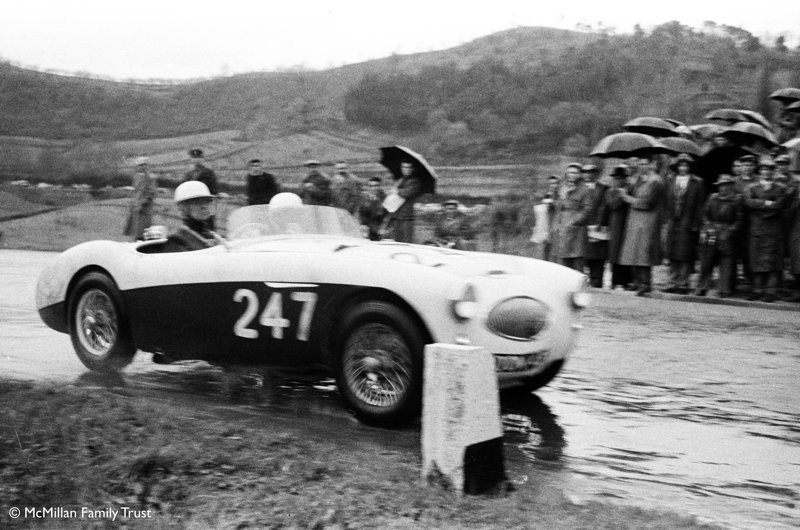
Finding Dad's Mille Miglia Photographs
For years, I knew that my father had been in Italy during his Army service in the mid 1950’s. While cleaning the family home this past year, I’ve had to sort through boxes and boxes of photographs, slides, family albums and ephemera from the Marstons and McMillans.
Tucked away among old family photographs and negatives, was a small collection of 3x5” black and white pictures of old sports cars in what looked like a race.
I don’t know much about vintage sports cars or races, but I took the stack of old photos and scanned them feeding them into ChatGPT to see if it could give me ideas to research further. I assumed it was Italy but needed to confirm.
These photos showed racing cars on public roads, spectators standing remarkably close to the course and countryside; the sort of informal roadside scenes that immediately suggested the Mille Miglia.
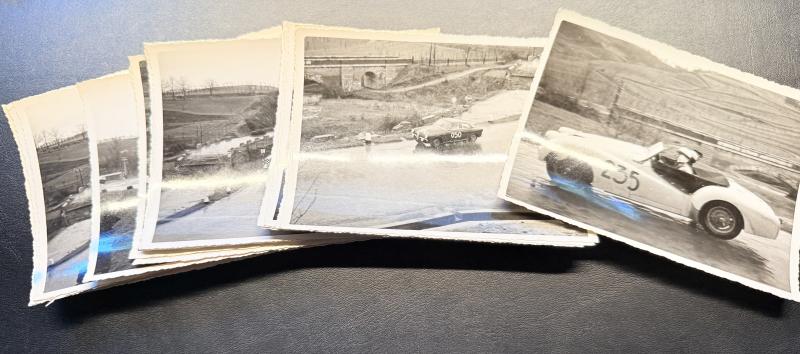
But there was very little information attached to them. I didn’t know exactly when they had been taken, where my father had been standing, or even whether my assumption that they were Mille Miglia photographs was correct.
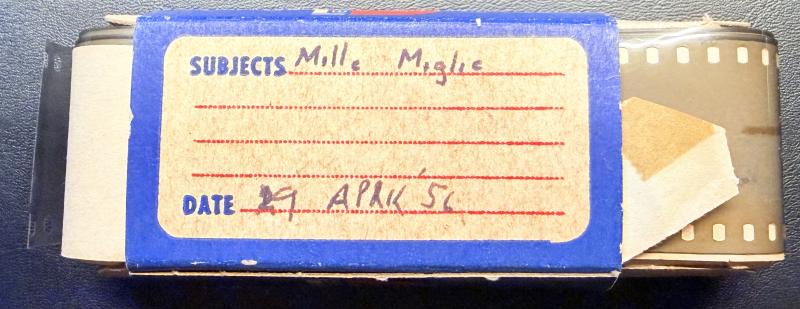
Then I found the letter.
“A week from today … I am going over near Florence again, to see the Mille Miglia.”
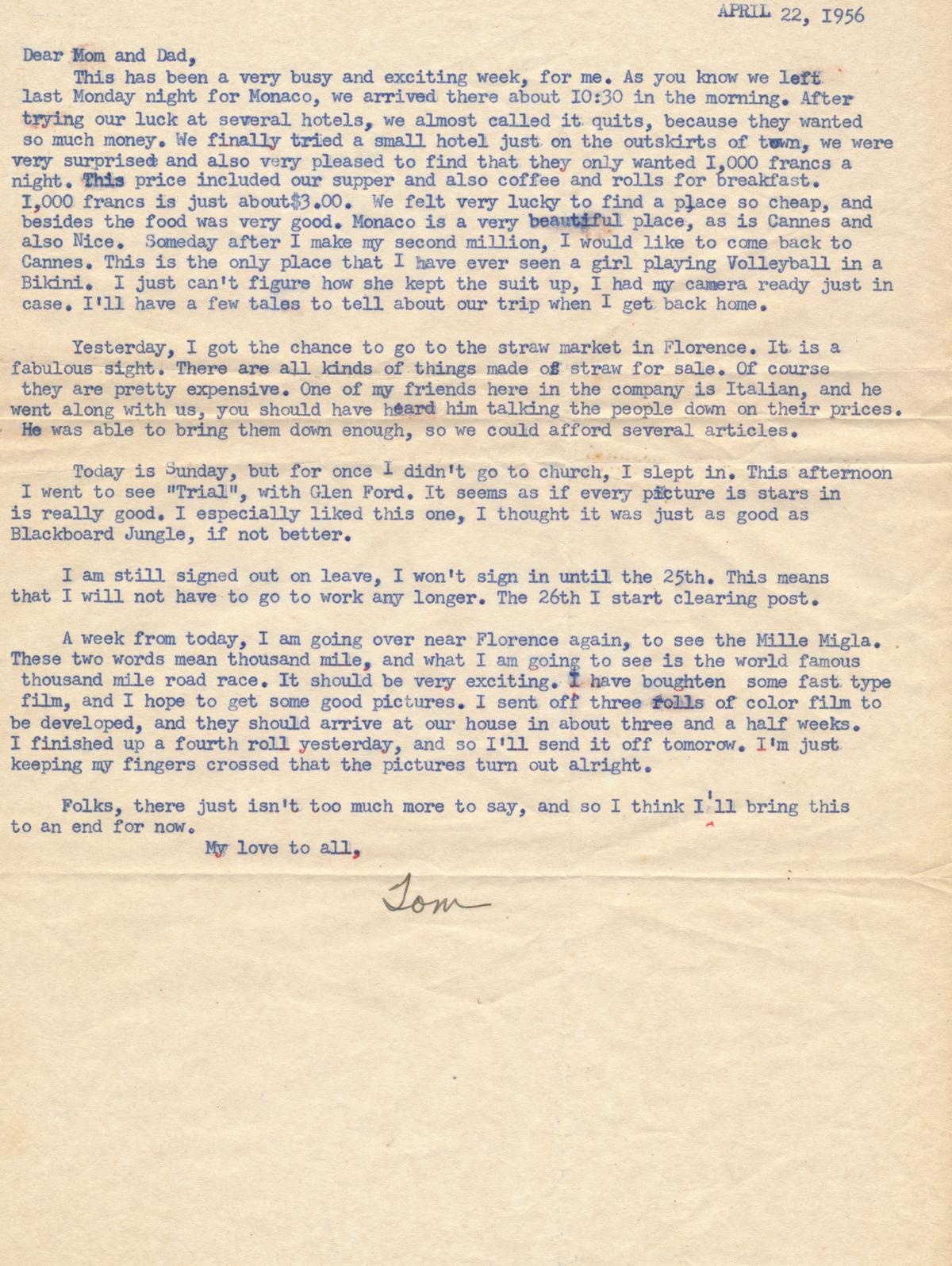
My father wrote home on April 22, 1956. Most of the letter is an ordinary letter from a young serviceman stationed in Italy: finding an inexpensive hotel in Monaco, visiting the straw market in Florence, seeing the film Trial with Glenn Ford, and preparing to leave his post.
Near the end, though, he casually describes what he intends to do the following weekend:
“A week from today, I am going over near Florence again, to see the Mille Miglia. These two words mean thousand mile, and what I am going to see is the world famous thousand mile road race.”
And then comes the sentence that suddenly connected the letter with the negatives I had found:
“I have bought some fast type film, and I hope to get some good pictures.”
He even describes the photographic process that would follow. Three rolls of color film had already been sent off for processing, he had just finished a fourth roll, and he was waiting to see whether the pictures would turn out.
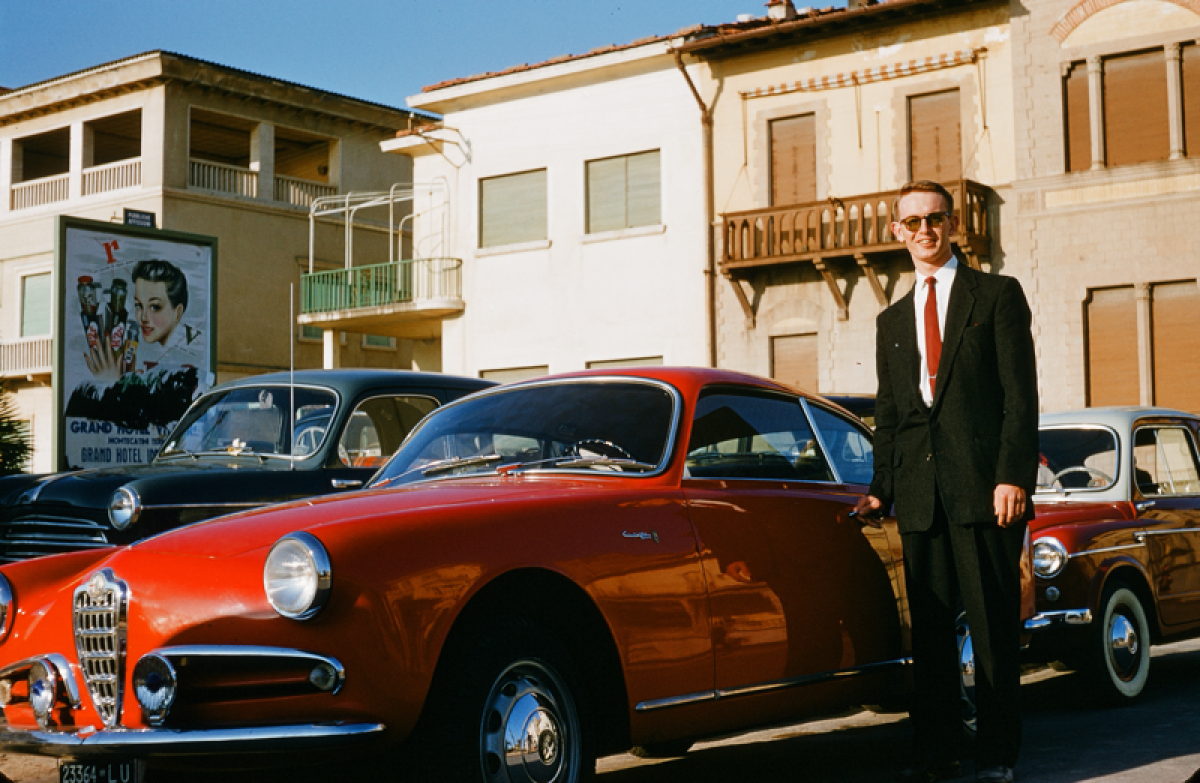
I found the color slides but they are typical tourist shots of Monaco, Florence, and Rome. There’s one shot of Dad in front of a red sports car that I haven’t identified the car or location yet.
Turning a collection of photographs into a historical record
The letter changed the project.
These were no longer simply unidentified old racing photographs that happened to have survived in the family. There was contemporary documentation showing that my father intended to attend the 1956 Mille Miglia and photograph it.
That gave me a starting point, but not necessarily an identification for every image.
I began looking carefully at race numbers, car shapes, bodywork, roadside features and anything else visible in the photographs. Some identifications were relatively straightforward. Others were much harder. A partially obscured competition number, a car photographed from an unusual angle, or a fleeting glimpse of a distinctive grille could lead down several possible paths.
And with historical photographs, a plausible identification isn’t the same thing as an authenticated one.
I wanted to establish as much as possible from independent evidence: What year Mille Miglia was this? Which cars were pictured? Who was driving them? Did the competition numbers agree with contemporary entry lists and published results? And could the physical locations in the photographs be reconciled with the route?
The April 22 letter provided an unusually useful piece of primary-source evidence. The 1956 Mille Miglia was held the following weekend, exactly as my father described when he wrote that he was going to see the race “a week from today.”
The photographs themselves could then be compared against the historical record.
Finding the cars again
One of the most satisfying parts of the project has been identifying cars that existed in the photographs only as a race number and a shape caught for a fraction of a second.
The Mille Miglia was not simply a race for the factory Ferraris and Maseratis that dominate retrospective accounts of the event. The field included an extraordinary variety of machinery and competitors. That makes these photographs particularly interesting to me.
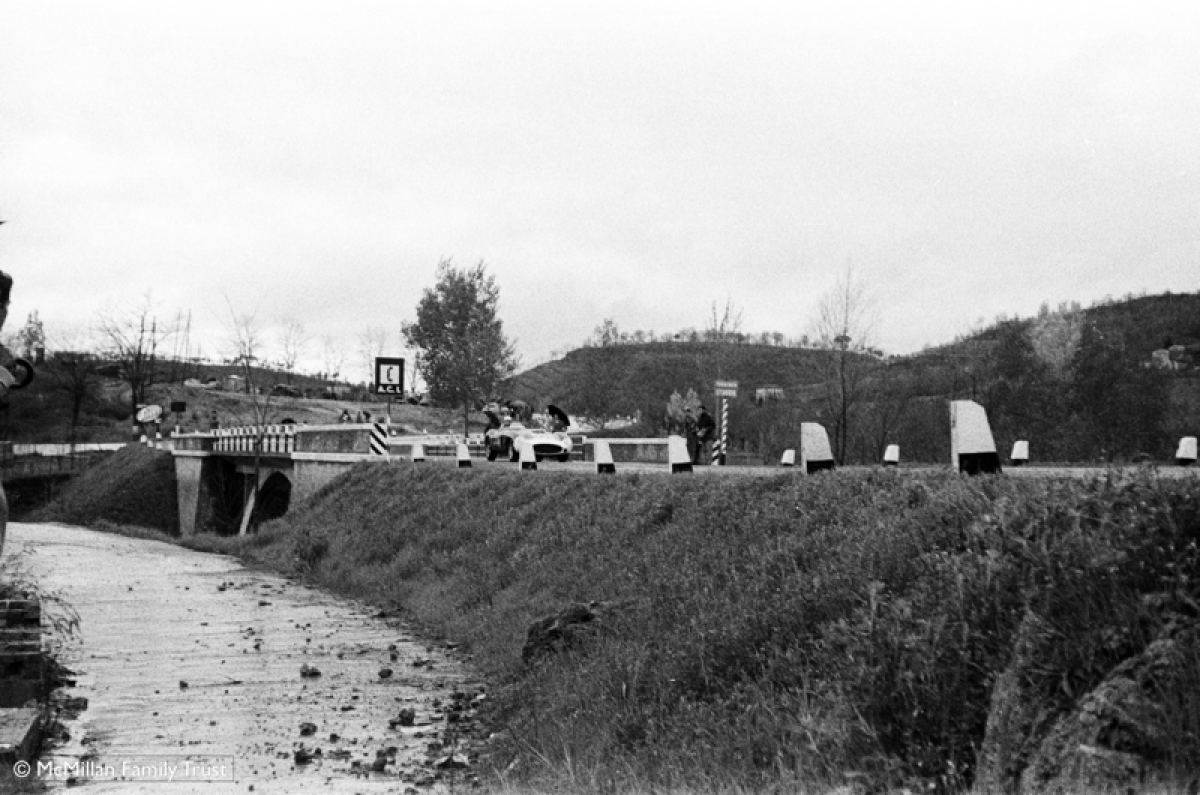
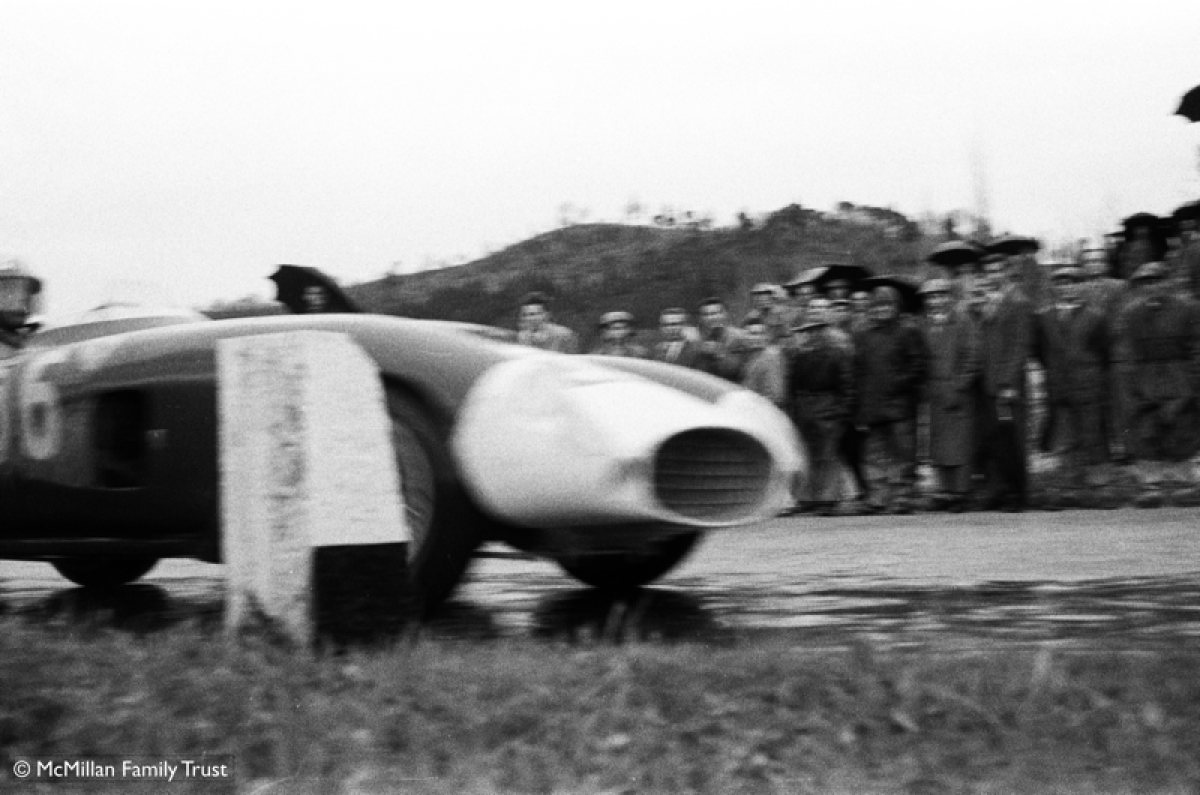
My Dad wasn’t standing in a controlled photographic area producing formal portraits of famous drivers. He was a spectator with a camera beside an Italian public road.
His photographs therefore record what he actually saw.
They show what watching the Mille Miglia actually looked like.
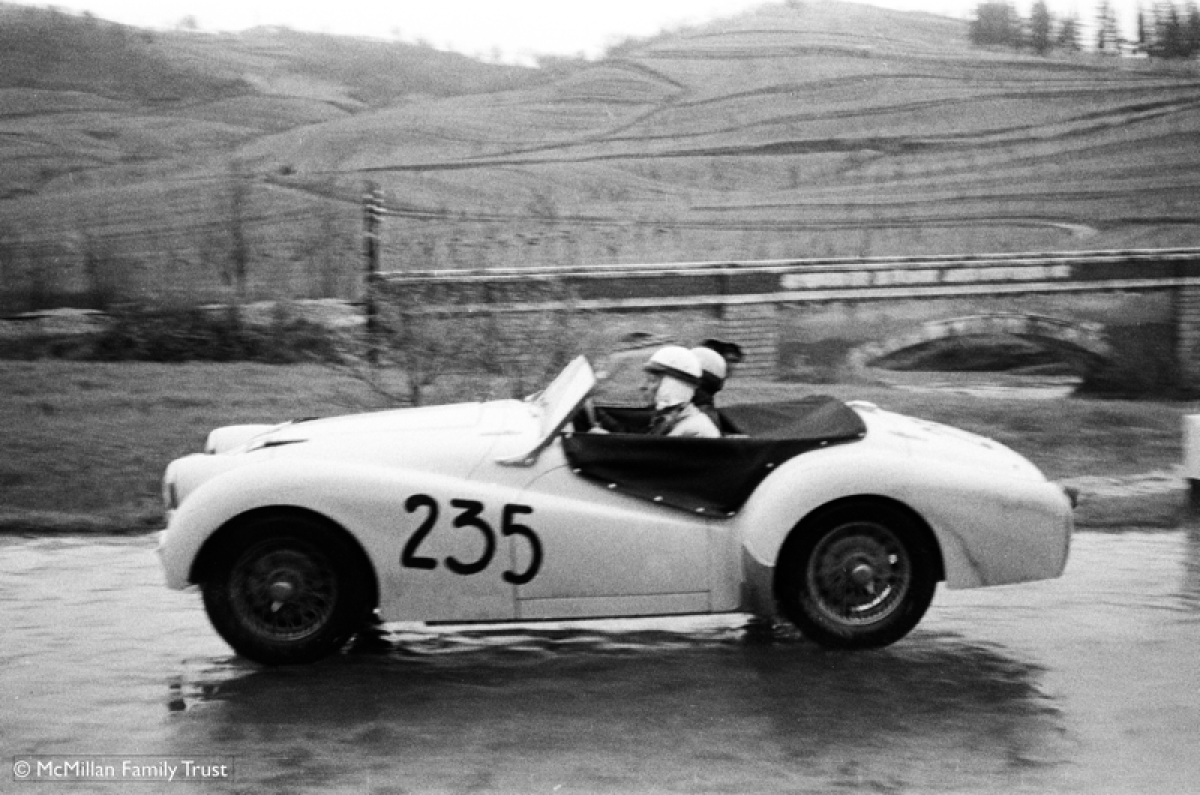
I used other sources of information from the Internet to authenticate what I could confidently state. In the case of car 66, our photograph isn’t completely visible. However, in the YouTube video Mille Miglia 1956, where we can see at :41 car 66. A reasonable conclusion.
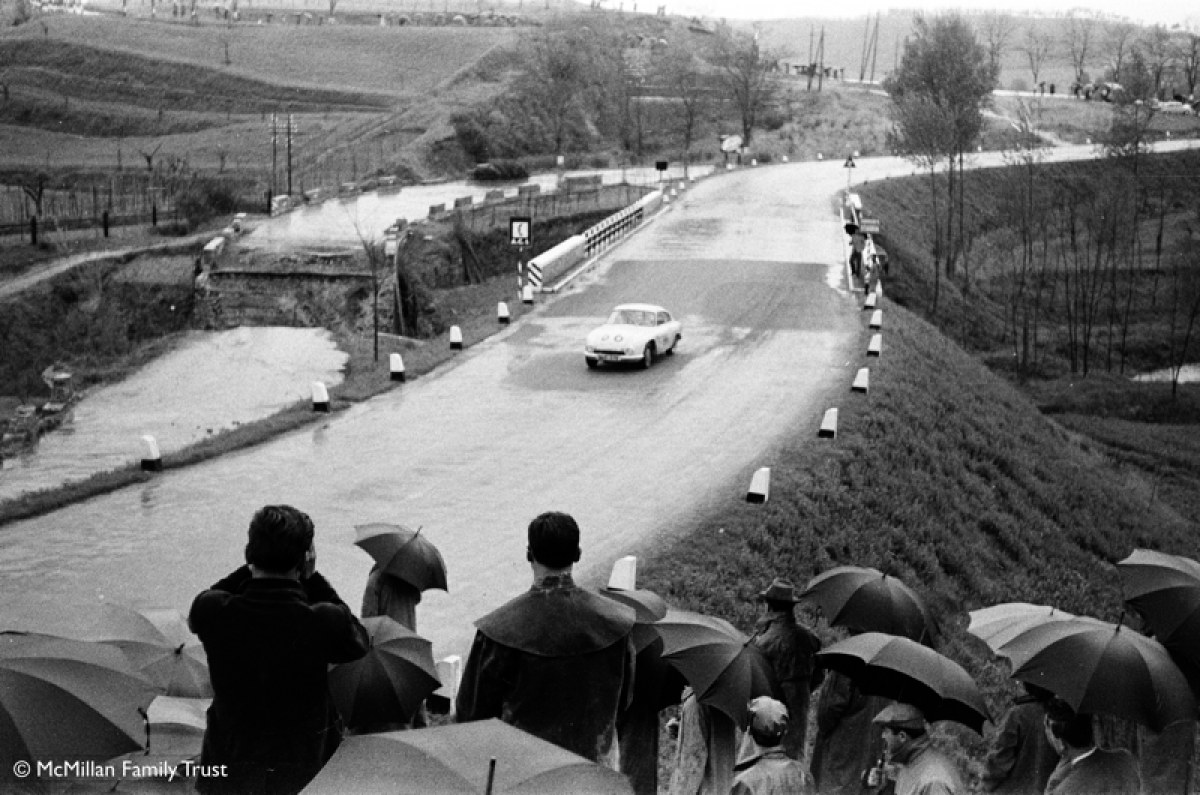
Other matching sources of information come from the site, RacingSportsCars.com, Mercedes-Benz archives, and Wikipedia. In some cases, there’s a confidence level; I could still be incorrect in identification due to resolution of the image source.
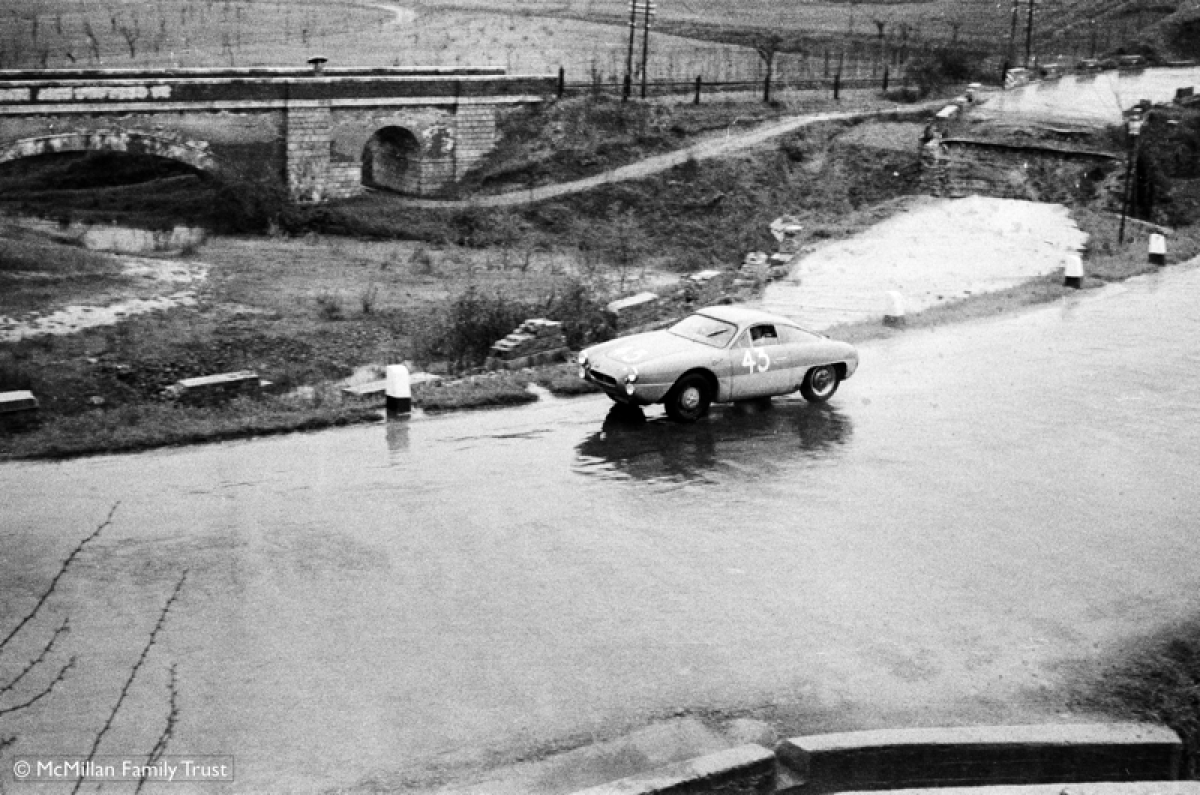
Adding the photographs to the historical record
As the identifications became more solid, my plan is to publish these images in this blog and contributing the photographs to RacingSportsCars.com. In reviewing their site for the 1956 Mille Miglia many of the entries did not have images that this project can supply.
Instead of the negatives remaining unidentified objects in a family collection, the images could now be associated with particular cars, drivers and the 1956 Mille Miglia. Someone researching one of those cars decades from now might encounter a photograph my father took beside the road in Italy in 1956.
There is something particularly satisfying about that transformation.
The photographs began as a personal record: pictures taken by a young American serviceman who wrote home that he had bought “some fast type film” and hoped to get some good pictures.
They survived as family artifacts.
Now they can also become part of the history of the race.
Going back to the negatives
The original scans of the black and white prints I found were useful for identifying the subject matter, but they did not extract everything preserved in the negatives. I have therefore gone back to the negatives and begun rescanning them at substantially higher quality, preserving them as high-bit-depth TIFF files rather than treating the old scans as the final versions.
That should reveal considerably more information. In some cases the negatives were helpful and in others we just don’t have enough resolution detail to improve the image.
At the same time, I am trying to be conservative about restoration.
These aren’t modern photographs that I’m trying to make look modern. Grain belongs to the film. Slight softness belongs to the camera and lens. The objective is to remove the effects of age—dust, scratches, damage and some tonal deterioration—without removing the character of the original photograph or inventing information that isn’t present in the negative.
The result should still look like a photograph taken beside an Italian road in 1956.
The remarkable thing about the letter
What I keep returning to is how casually my father described all of this.
There is no suggestion in the letter that he thought he was about to document something that his family would still be examining seventy years later.
He was simply going to a race.
He explained to his parents that Mille Miglia meant “thousand mile.” He called it the “world famous thousand mile road race.” He bought faster film. And he hoped the pictures would come out.
They did.
And somehow the negatives, the prints, and the letter explaining why he took them all survived.
What began for me as a box of old family photographs has consequently become something much more interesting: an attempt to reconstruct one person’s afternoon beside the Mille Miglia and, photograph by photograph, connect what he saw through his camera in 1956 with the surviving history of the race.
There are still cars to identify, locations to determine, negatives to scan and photographs to restore.
That’s part of what makes the project so compelling.
The race lasted a day.
The photographs have been waiting seventy years to tell the rest of the story.